GOTO | MINBAR | Monash astrophysics | IReNA | JINA-CEE | IGDORE | vcard | CV

Fri Aug 21, 2026

beans III: ensemble mode application to SRGA J144459.2–604207
The remarkable X-ray transient SRGA J144459.2–604207 was discovered by ART-XC/SRG when it went into outburst in 2024, and quickly distinguished itself as a 447.9 Hz accretion-powered pulsar in a 5.2 hr binary, with polarisation detected from the persistent emission with IXPE, and a frequent, consistent series of bursts observed with IXPE and Insight-HXMT. Almost 100 thermonuclear (type-I) bursts were detected from the source, with recurrence times as short as 1.6 hr.

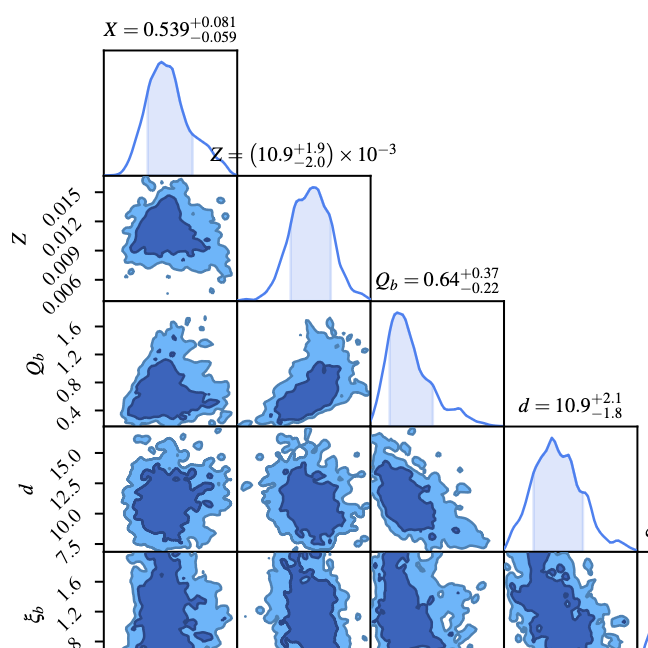
To analyse such datasets we added an "ensemble" mode to the beans(p) code, written by Adelle Goodwin and myself, which works in a much more efficient way by matching the average properties of samples of regular, consistent ("clocked") bursts like in SRGA J144459.2–604207 and a few other sources. We applied the new code to daily epochs of data and derive a slightly sub-solar fuel composition, with X=0.54 and ZCNO=0.01. While the code mostly matches the observations, we suspect the simple ignition model we use doesn't quite include sufficient physics to be very confident in the constraints. Even so, the analysis (and the related simulations) are an important proof-of-concept for the code.

The paper has been submitted to PASA and is also available at arXiv:2608.21196.
Labels: 2026, papers

Sat Aug 1, 2026

GOTO identification and broad-band modelling of the counterpart to the SVOM GRB 250818B

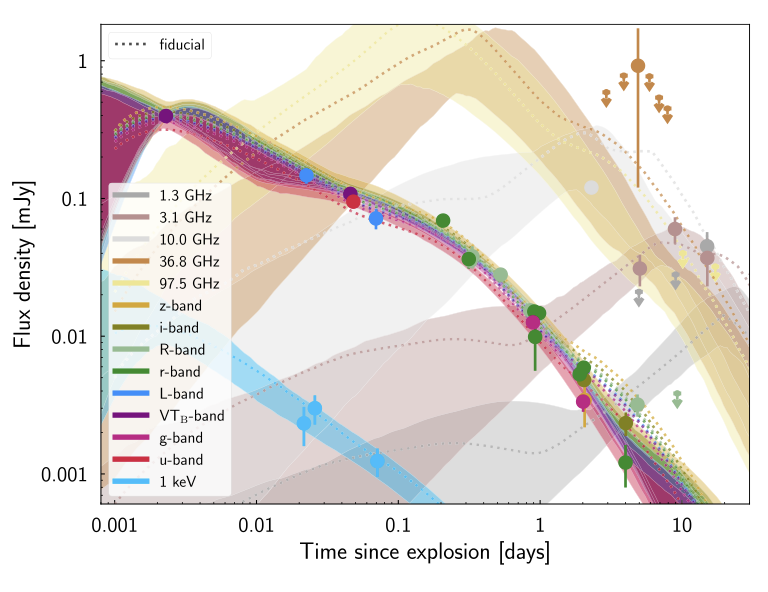
The Franco-Chinese SVOM mission, launched in 2024, hosts four main instruments optimised for following up gamma ray bursts. Our Gravitational-wave Optical Transient Observer (GOTO) project is now following up SVOM triggers in addition to other high-energy satellites, and identified the optical counterpart to GRB 250818B (GOTO25fzq/AT 2025ukm) in observations taken just over half an hour after the trigger.

Monash PhD student Sergey Belkin led the followup effort on this object, gathering and compiling multiband optical/near-IR, X-ray and radio data covering the afterglow. A likely redshift of z=1.216 derived from Keck spectroscopy made for a challenging search for a galaxy host, and ultimately none was found. Sergey's paper reporting the exhaustive analysis of this event has now been published by MNRAS.

Labels: 2026, papers

Wed Apr 1, 2026

What we’ve learned from citizen science: 5 projects that made a difference

The flagship outreach effort of our Gravitational-wave Optical Transient Observer (GOTO) project is Kilonova Seekers, a project built on the Zooniverse platform which invites members of the public to identify and confirm transients detected in GOTO observations.

The project, brainchild of Tom Killestein (Warwick) and Lisa Kelsey (Cambridge) was selected as one of "5 projects that made a difference" for a new Conversation article published today. The article is part of a broader series covering the wonderful world of citizen science.

Labels: 2026, outreach

Fri Nov 28, 2025

New International Space Science Institute team on thermonuclear bursts

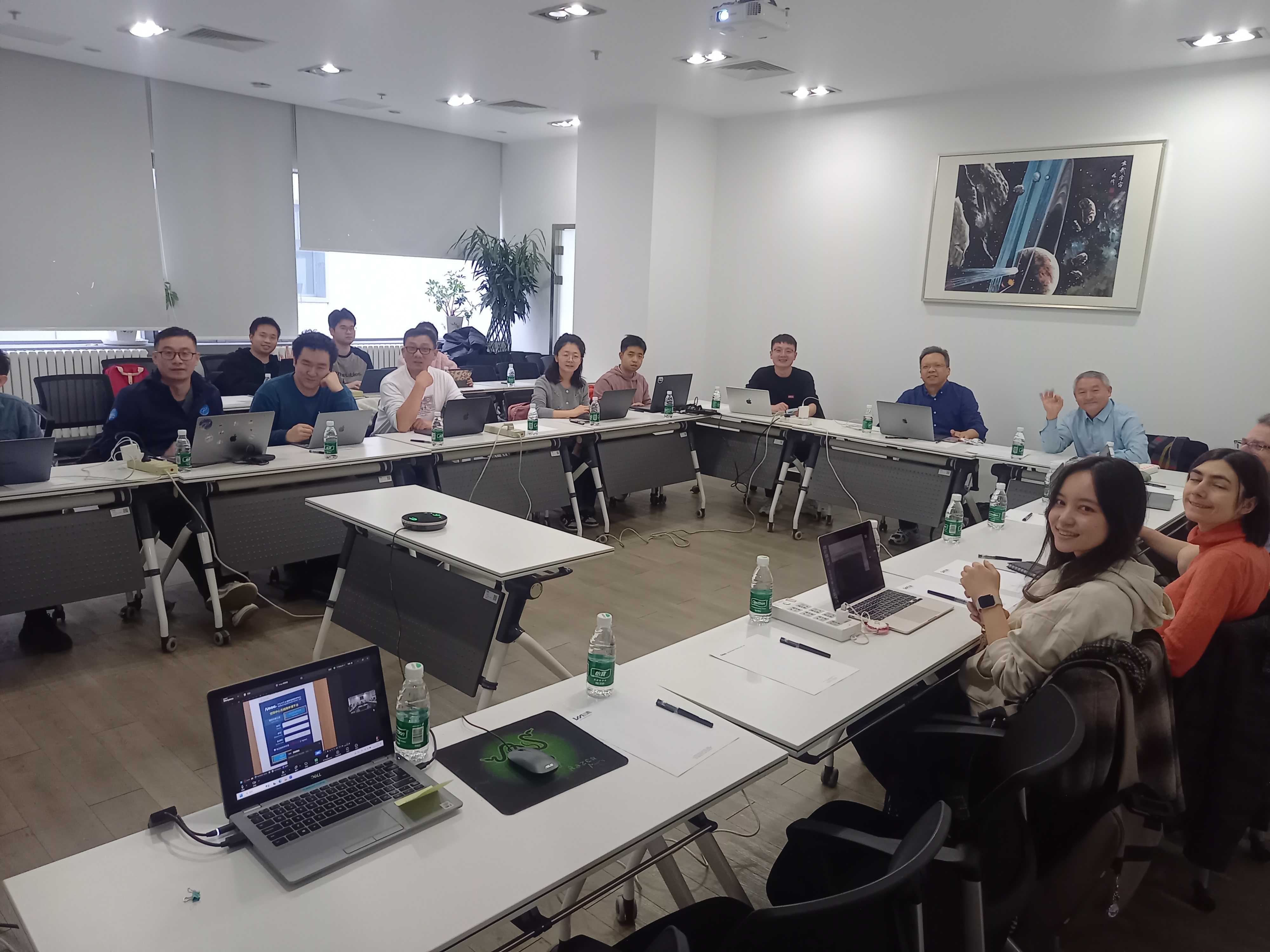
The first meeting of our new international team on thermonuclear bursts has just concluded. Team members and local attendees met in Beijing at the International Space Science Institute's Chinese networking venue, at NSSC. Attendees from the Netherlands, USA, Spain, Japan, China and of course Australia delivered talks and participated in discussions ranging widely over topics relevant to thermonuclear bursts, and we also heard about exciting new observations from new facilities like Insight-HXMT and Einstein Probe.

As is tradition we broke up the scientific sessions with excursions to local sights including the Forbidden City and a nearby stretch of the Great Wall. We enjoyed wonderful late autumn weather and the generous hospitality of team leader Zhaosheng Li and students from Xiangtan U..

Labels: 2025, visits

Mon Oct 20, 2025

GOTO observations of GRB afterglows

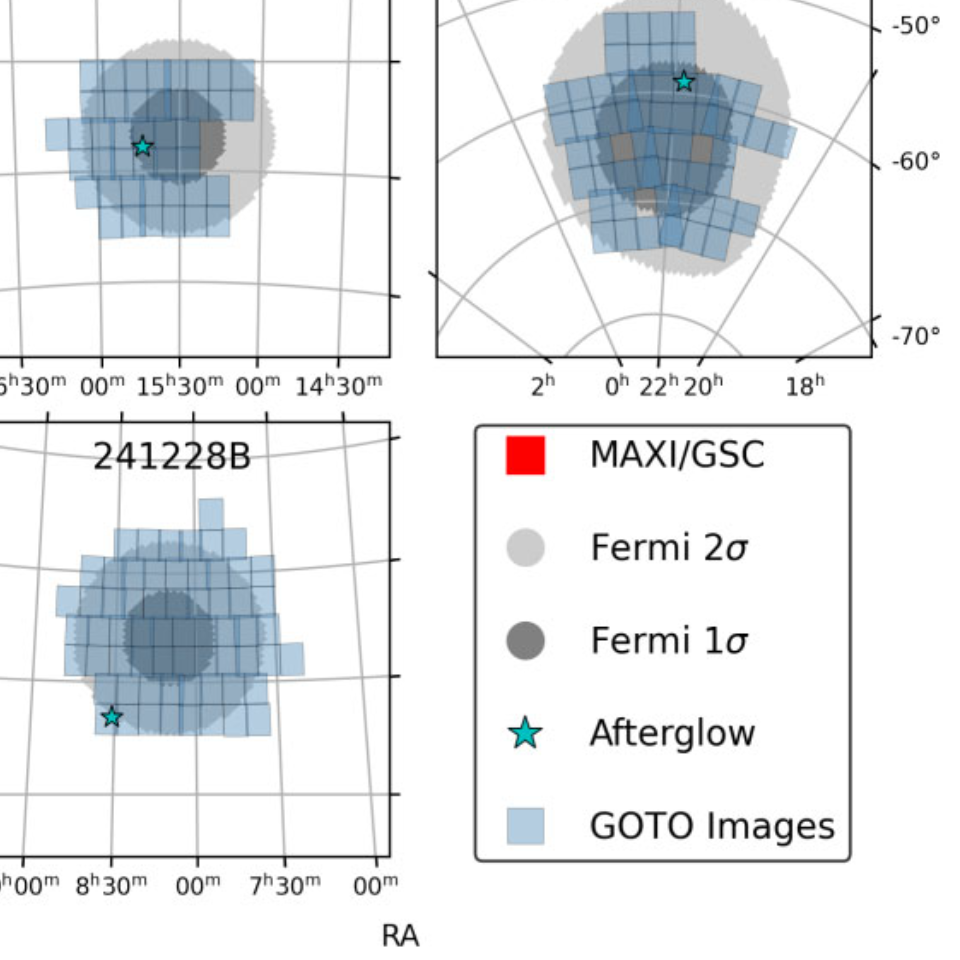
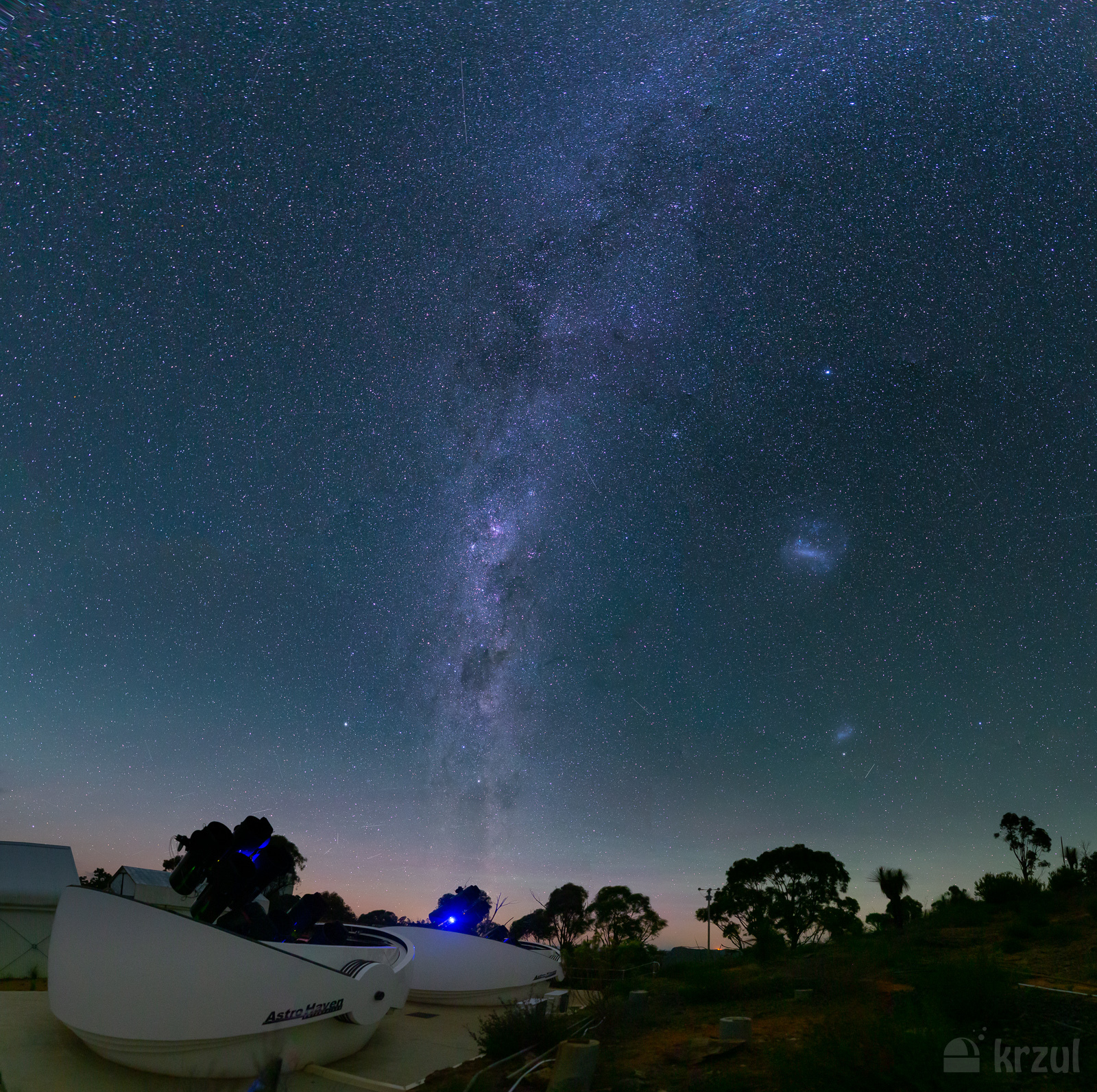
One of the most successful efforts to date with our GOTO telescope network is the followup and detection of gamma-ray burst afterglows. Our wide field of view is well suited to covering the relatively large Fermi localisation regions, and collaboration member Amit Kumar assembled a comprehensive report on our localization and multiband follow-up of seven Fermi/GBM and MAXI/GSC triggered long GRBs: (240122A, 240225B, 240619A, 240910A, 240916A, 241002B, and 241228B) discovered by GOTO in 2024. Observations and followup include optical spectroscopy, radio and X-ray detections to fully characterise these events. Although their optical afterglows resemble those of typical long GRBs, the prompt spectra are consistently harder than the long-GRB average. Monash PhD student Sergey Belkin contributed broad-band afterglow modelling, to constrain jet half-opening angles to a few degrees, and estimate beaming-corrected kinetic energies. Amit's paper has now been published by MNRAS.
Labels: 2025, papers

Fri Sep 12, 2025

GOTO science meeting 2025

Our GOTO collaboration held it's latest scientific meeting in hybrid format over the last two days. We heard from the leads of our various working groups on the progress chasing supernovae, gamma-ray bursts, and even more mysterious transients. I attended remotely from Spain, during a break in a 3-week cycling holiday crossing the Iberian Peninsula.

A highlight for me was the presentations by Monash PhD student Sergey Belkin, working on followups of gamma-ray bursts detected with the Fermi satellite, and Masters candidate Kangming Pu, working on a new project aimed at systematic followup of asteroids observed with GOTO. While Sergey has already had a number of successes with discoveries and detections of GRB afterglows, the asteroid work is of particular interest, as it's a relatively unexplored area for GOTO but potentially could have some exciting new science outcomes. Amongst other objects that Kangming has detected in our GOTO network observations is the remarkable interstellar comet, 3I/ATLAS. Hopefully much more interesting science to come!

Labels: 2025, meetings